Local Area Guide
Life at Nethergill Farm
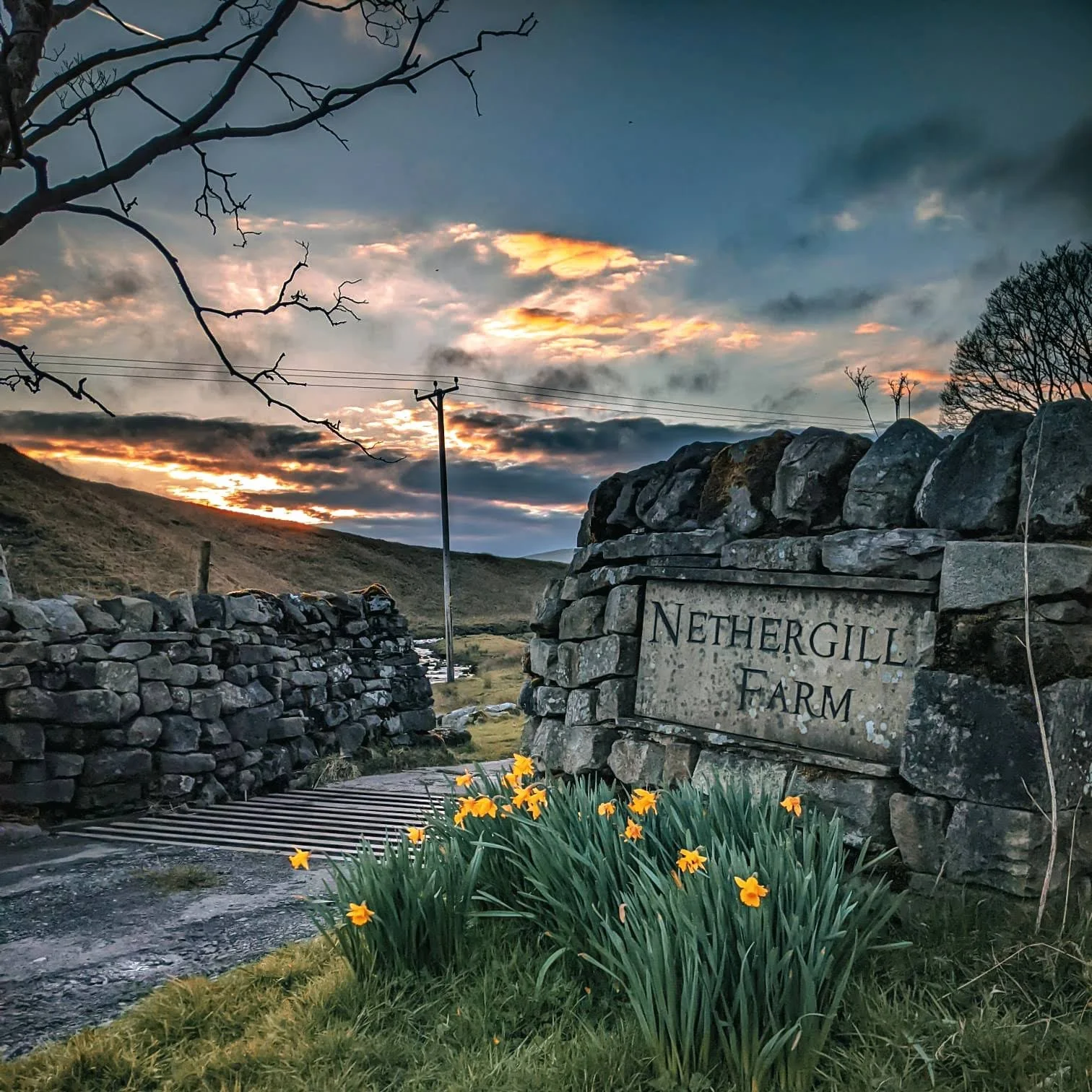
Nethergill Farm fulfils our life-long ambition to create and be custodians of a sustainable working farm and long-term wildlife conservation project.
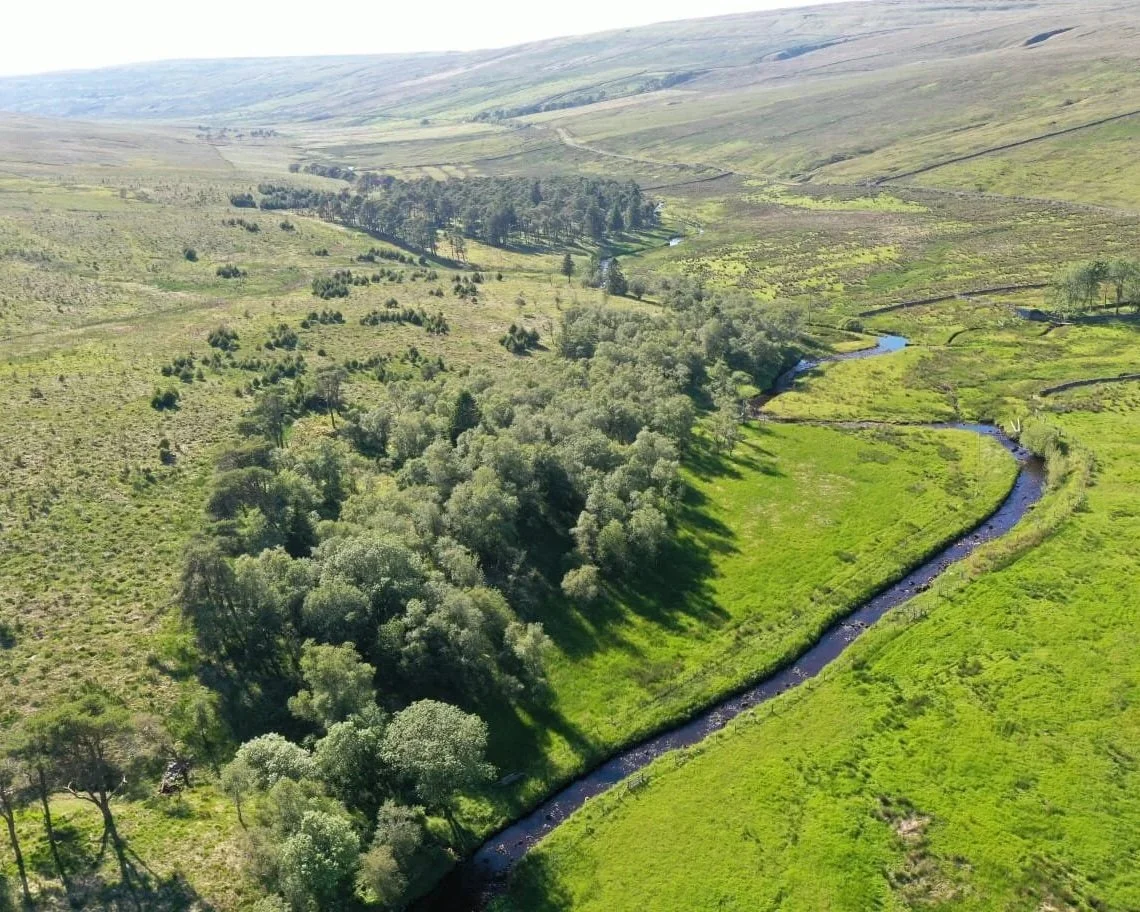
Set in 400 acres at 1,200–1,600 feet, Nethergill is tucked into the hillside beneath the road to Hawes. Close to the farmhouse, 70 acres of pasture offer gentle ground; beyond it, the moor stretches out — raw, wet, peaty, and beautifully untouched. What it lacks in productivity, it more than makes up for in purpose: an ideal landscape for our rare‑breed Belted Galloways and the wildlife that defines the Dales.
Why Nethergill
Nethergill has given us the rare chance to live in one of the most beautiful corners of the country, a place where we’re surrounded by land whose wildlife and character we can help nurture to its fullest potential.
Our role as custodians is simple: to leave this home healthier than we found it. By working with nature, we aim to shape a landscape that supports both biodiversity and people, offering free access so anyone can step into this valley and make it part of their world.
A Brief History
The large Victorian farmhouse and traditional stone buildings were built in 1871 by Charles Woodd, cousin by marriage to the naturalist Charles Darwin. Once part of a wider estate, Nethergill served as a shooting lodge for the gentry who stayed at Oughtershaw Hall.
Our Rushes and Meadows
The soft rushes - Juncus effusus - are woven into the story of Nethergill. Left unmanaged, the “in‑bye” land (the sweeter, more productive pastures close to the farmhouse) would quickly become dominated by rushes, just as it was in the early 1900s.
During the war years, this land was likely pushed into food production, and the rushes would have been cut back hard. More recently, farmers were encouraged to let rushes return in the hope of attracting nesting waders. But nature rarely thrives in absolutes. It’s now understood that a mosaic — patches of rushes alongside open ground — creates the richest mix of habitats. That’s the balance we work to maintain.
Our hay meadows are part of that story too. Once common across the Dales, they are now among the UK’s most threatened habitats, with roughly 97% lost. Restoring them to their old, biodiverse richness is one of our deepest commitments.
Electricity
Our electricity is supplied by the national grid and is generally reliable. Because, like many homes in the Dales, we’re on a single‑feed line rather than a looped system, any disruption further down the valley can occasionally affect our supply.
The solar panels on our barn supply 75% of our electricity needs. Please ensure all lights and electrical appliances are turned off when not in use.
Heating
Our heating comes from our biomass boiler, “Bernhard”. He’s fed with wood we process and dry on the farm, mostly from windfall trees. The system can also run on wood pellets, which are automatically fed into the boiler. Bernhard heats a large buffer tank of hot water, which then supplies the radiators through a heat exchanger.
The heating is set to come on for a few hours in the morning and again in the evening. Please adjust the temperature using the thermostat in your holiday let — we usually set it between 18–21°C. If the heating is not scheduled to be on, the thermostat will not have any effect. As we are trying to be as eco as possible, we respectfully request that the windows are not opened at the same time as the heating is on.
If you need extra warmth, a log‑burning stove, cosy blankets and electric convection heaters are available in your holiday let.
Recycling & Compost
We recycle as much as we can and try to avoid single‑use plastics and over‑packaged products. Tins, plastic and glass bottles, paper and cardboard can all be recycled. You’ll find a recycling bin under the sink. When it’s full, please use the labelled bins in the wooden shed to the right of your front door.
A small kitchen caddy is provided for compostable waste such as tea bags, raw coffee grounds and raw vegetable scraps. Please empty this into the large composters on the right‑hand side of the farmhouse drive as you enter the yard.
Coffee machine: instructions
Fill the water tank with fresh water. Press either the Espresso or Lungo button to switch the machine on. The light will blink for about 25 seconds while it heats up; when the light stays on, the machine is ready.
Lift the lever fully and insert a capsule. Close the lever and place a cup under the coffee outlet. Press the Espresso (40ml) or Lungo (110ml) button to start — the machine will stop automatically. To stop the flow early or top up your cup, press the button again.
Remove your cup, then lift and close the lever to eject the used capsule into the container.
Wood burning stove: instructions
Firelighters, kindling and paper are provided for your stay. Please don’t empty the grate — a bed of ash actually helps the fire burn more efficiently. If you’d like help getting the fire going, just let us know.
To light the stove, push the lever under the firebox fully to the right to open all the vents, then gently close the door. The temperature gauge on top of the burner will begin to rise. After around 10 minutes, move the lever to the left to reduce the airflow — this is the “best operation mode”. Adjust the lever as needed.
PLEASE DO NOT LEAVE THE WOOD BURNER UNATTENDED WHILE LIGHTING.
Please also avoid letting the stove overheat — use the temperature gauge as your guide. One basket of logs is provided on arrival. Additional logs are available at £10 per basket; just let us know if you’d like more.
PLEASE ENSURE THE WOOD BURNER IS FULLY SHUT DOWN WHEN YOU LEAVE THE COTTAGE AND LAST THING AT NIGHT.
It is not designed to stay alight overnight.
More Information in our Guest Area